Putting the heart back into learning… (and the lungs, legs, arms, too!)

Observing the steady impact on young learners of spending more time in front of screens and much less time being active outdoors, as part of their professional learning, IICS teachers decided to explore what they could do to redress this apparent growing imbalance.

Research

Starting with research, they found overwhelming numbers of articles supporting the connection between movement and learning.

“Evidence from imaging sources, anatomical studies, and clinical data shows that moderate exercise enhances cognitive processing. It also increases the number of brain cells. And as a bonus, it can reduce childhood obesity. Schools that do not implement a solid physical activity program are shortchanging student brains and their potential for academic performance. Movement activities should become as important as so-called “book work.” We need to better allocate resources to harness the hidden power of movement, activities, and sports. This attitude has become more and more prevalent among scientists who study the brain. It’s time for educators to catch on.”

Eric JensenMovement and Learning

Practice

Wishing to be active learners themselves the team decided to spend more time exploring practice rather than theory.

movement and play was important for grades 1-3 and so does everyone else, and I didn’t want to research…. I wanted to play”

Robin Hinkley – Gr 3 Teacher

The PLC team explored observed and tested creative ways to involve movement and play in everyday learning. They created short videos to demonstrate the activities and reflect on their learning accessible via thinglink: https://youtu.be/97MubGyccaA

                                                                                                                                                                                                                   “ Can we do this every time!”- Yasemin

Students practicing their spellings on unusual or unorthodox surfaces outside

Outcomes

The time and scope of this exploration did not allow for thorough quantifying of impact on student learning, but informal observations of staff members suggest that increasing the playful and physical elements of learning tasks has positive impacts on students’ motivation and engagement with them. In addition it was noted that in these activities, students not normally enthusiastic or pro-active seemed to thrive thus allowing more students to be successful. The teachers also noted that the students seemed more energized but focused and relaxed during and after these more physically active sessions.

Their work has initiated some important conversations with IICS educators about capitalize on the potential of movement and play to inspire greater learning and well being for our children.

It deeply connects with the work also being explored with in the Mindfulness PLC and of course the philosophy of play-based learning being so successfully implemented in the Early Years at IICS.

https://www.thinglink.com/scene/762411311236644864

Further reading for the extra keen as recommended by the PLC team:

http://evolution.binghamton.edu/evos/wp-content/uploads/2008/11/Pellegrini02.pdf

http://www.journalofplay.org/sites/www.journalofplay.org/files/pdf-articles/3-4-article-gray-decline-of-play.pdf

http://www.ascd.org/publications/books/104013/chapters/Movement-and-Learning.aspx

3

CLIL – What is it?

CLIL stands for Content and Language Integrated learning. The CLIL framework emphasizes mainstream teachers as both subject specialists and language facilitators. The methodology of CLIL is focuses on the learning of a language through the acquisition of subject-specific content. A considerable body of case studies and short-term research show CLIL to have a myriad of positive outcomes, namely within linguistic and academic contexts.

CLIL students tend to be more enthusiastic and motivated than students within a traditional second language programme. As a consequence of this CLIL pupils also tend to do better in both first and second language competence exams than students within a more traditional system.

We often find ourselves as educators discussing the central importance of language as a key to accessing the curriculum and experiencing success (duh) and the particular focus on this of the IB MYP and DP programs. student learning.

How do we know it is effective?

There is much research supporting the effectiveness of this approach – a good one to read if you are interested is Dalton-Puffer, Christiane. Discourse in content and language integrated learning (CLIL) classrooms. Vol. 20. John Benjamins Publishing, 2007.

Is it relevant to IICS students?

Approximately 80% of IICS students are non-native speakers of English

What does it look like in practice?

Next steps

HIna has a lot of experience in this field. She made it a focus of her Masters and authored three textbooks looking at integrating CLIL and middle school science.

She is very happy to support individuals wishing to know more about this approach and is also pleased to share her expertise to larger groups.

Additional resources:

The British Council – https://www.teachingenglish.org.uk/teaching-teens/resources/clil

New Inspirationfile://localhost/- http/::www.macmillaninspiration.com : new:resources: web-projects

Oxford University Press – https://elt.oup.com/elt/students/networkitaly/ clil/ Network_2_CUL_Lesson s.pdf

One Stop English  – http://www.onestopenglish.com/clil/

Universita degli Studi di Foggia –  http://www.unifg.it/sites/default/files/ allegatiparagrafo/20-01-2014/coyle _hood_marsh_clil_toolkit _pp_ 48-73.pdf

2015-2016 has been an exciting year in the IICS Secondary School science department.  Over the past years the science teachers had noticed that student performance in Grade 10, 11 and 12 varied immensely, with high-flying students greedily consuming more knowledge while the course material seemed to run away from those who were struggling.   With such a variety of ability levels in any given class, it was becoming extremely challenging and rather impractical for teachers to deliver lessons at an appropriate difficulty level for all students in the class at the same time.  A new approach was needed to meet the needs of all students.

With this in mind, the science department began work in early 2015 on developing a modular system of curriculum delivery.  Rather than running traditional semester-based science courses, the teachers developed multiple three-week modules, each of which could be studied independently by students.  Each module included the basic content and skills that needed to be covered in the unit together with extension work for those who completed the required tasks more quickly.  Theoretically, students would be able to take the assessment tasks when they were ready, particularly tests and written assignments, and the teacher would be able to circulate and work with students on an individual basis throughout the lessons.  It would also be possible for students who completed modules very quickly to work on other modules (from a different science) in the remaining time, which would allow them to experience units in all three of the main science subjects rather than just taking a semester each of two of them.

The advantages of running the modular system were varied.  Students were able to work at their own pace throughout each module; therefore, there were far fewer instances, if any, of students sitting in a classroom not understanding whatever was being delivered by the teacher.  Additionally, as students were making choices within each module, it was easier to hold them accountable for the work they were doing, and there were fewer excuses available for poor performance.   Finally, as students were flipping between sciences from module to module, by the time they had completed the first semester, they had experienced two modules from two different sciences, and were, therefore, able to make more informed choices for their DP courses at that point.

As with all educational initiatives, however, together with the advantages came challenges.  Firstly, the amount of work needed to create the modules so that students could work in a self-directed way was always going to be difficult for the teachers, particularly as the intention was certainly not to have all students working quietly at their computers without any peer interaction.  Modules could not just result in the mindless content guzzling that so many online courses seem to become.  Secondly, teachers soon realized just how challenging it was mentally and physically to have to be aware of the progress being made by up to fifteen students in a class, all of whom were at different stages of the module.  Finally, the self-paced nature of the modules resulted in challenges setting up and running assessments.

These were the challenges that the IICS science team wrestled with throughout their PLC work during the 2015-2016 academic year.  Discussions in PLC time together with ongoing reflective practice in the classroom have certainly raised awareness in the science department of the potential benefits and challenges that the delivery of modular learning entails.  The key learning points that the team has shared include:

  • Modules need to be longer to accommodate all the interruptions in class time that life in a busy Secondary School inevitably results in.
  • Students both enjoy and need collaborative work as part of the learning process.
  • Generally, students who lack effective study skills are the ones who seem to struggle with modular learning. However, it is keeping them accountable and helping them to develop more independence.
  • Generally, students who have done well in this system would probably do well in any system.
  • Clear objectives shared at the beginning of the module are imperative to the success of a module.
  • Progress checks are an imperative part of a module to make it successful.

Most international school teachers face the daunting challenge of huge differences in academic ability levels and linguistic competence in any given classroom, and the modular approach has the potential to offer a method of curriculum delivery that may alleviate the seemingly impossible requirements of differentiating for such a diverse student body.  The IICS science teachers have been taking this challenge head on throughout the year and their learning from this year puts the department in good stead to continue such work in future years.  The next steps are likely to involve gathering student feedback on the experience, pushing some modular learning into Grade 9 where appropriate, and sharing the learning with other departments also interested in such an approach.

Meeting the needs of all learners is the challenge that has been set; an effective, carefully considered delivery of thoughtfully designed science modules seems to have a lot of potential to help us meet this challenge.

 “You work by yourself but you also get the interaction with the teacher when you need it and you can ask questions…I feel like Grade 7’s might struggle with it because they’re used to working with a teacher.  Suddenly changing it to individual studying might be very hard for them.”

– Sophie Krafft, Gr 10 Student

Recently, I traveled to Coventry, UK for an IB DP Maths SL (category 2) workshop at the University of Warwick.   The workshops were run by IBSCA and went very smoothly. The venue was a dedicated conference centre on the university campus. It is easily accessed by direct flight to Birmingham, a short train to Coventry, and then taxi or bus to the university. The facilities were good. Seminar rooms were well equipped with whiteboards and projectors, paper and pens provided. All meals were provided – healthy and tasty with good choices for different dietary needs. The accommodations were adequate, but spartan. The rooms were essentially dorm rooms. Small, with a single bed, but clean and with ensuite bathrooms. The venue is a little removed from the city and there were no sponsored activities off-campus, so there was little opportunity to see any of Coventry.  

The workshop leader was experienced and well-prepared. We spent time marking assessments and moderating, ensuring we understood the IB’s expectations. We discussed pacing and organization of curriculum delivered in the course. A lot of time was spent looking at the IA. We got better clarity on the quantifying the assessment criteria and a lot of ideas for how to prepare and introduce the IA to students. I have uploaded all the resources obtained from the workshop to a Google Drive folder: here.    

Tim W.

“Of what use is it that we can travel to the Moon, if we can’t cross the abyss that separates us from ourselves?”

– Thomas Merton-American Monk and writer

On a daily basis many adults struggle to remain calm and present in the moment multitasking and dealing with increasingly hectic daily routines. As a Primary Learning Support teacher at IICS, I regularly encounter children who also find it hard to focus and pay attention to the present. After conversations with colleagues who had similar observations we decided to try  and  find some appropriate tools to help ourselves and our students. One of my colleagues suggested mindfulness and immediately I felt drawn to the practice having heard of it before but not being aware of what it actually meant. As a team we then set out to explore mindfulness and how we could incorporate it into our lives and at school.

Research

The first thing we decided to do was to take an online course for adults on Mindfulness by Monash University. We decided to do this as it seems that we needed to initiate mindful practice ourselves before we could start to think about how to implement it at school. This free online course is very practical and takes 3 hours per week over 6 weeks. The course gives a very concise overview of what mindfulness is and the science behind it. There are examples of mindful meditations to practice as well as forums for sharing thoughts and experiences and captivating videos. The guided meditations and the self paced nature of the course make it a worthwhile experience. https://www.futurelearn.com/courses/mindfulness-wellbeing-performance

Practice

Meanwhile we started to look at practical ways that we could implement mindful practice at school. Research presentations by Daniel Goleman gave  us ideas for how to practice “belly breathing” with early years children. https://www.youtube.com/watch?v=scqFHGI_nZE

As mindfulness is about directing our attention inwards, working on noticing when you breathe is one way to start working on awareness. We practiced   our belly breathing using “breathing buddies”, stuffed animals that we placed on our tummies to observe the movement they made as we exhaled and inhaled deeply concentrating on becoming aware of our breathing.


We also started to trial the Smiling Mind site and free app with our students. http://smilingmind.com.au/my-smiling-mind/

This site is a free sign up and has many guided meditations and activities to work through online. The site allows you to choose the age-group you work with, has audio files to download and shows how you and your students are progressing with a history tab, achievements, personal evaluations etc… Another website we used that has similar mindful practices for children is Go Noodle. This site also has exercises that are designed to help children focus in a fun and hands on way. https://www.gonoodle.com/

Mindfulness is purposefully paying attention, in the present moment, in a non judgemental way. Mindfulness meditation practices are not at all strange rituals but are in fact readily and easily integrated into everyday life.

We therefore decided to incorporate mindful eating, mindful colouring and mindful walks into our practices as good practical ways to focus our attention and open ourselves to sensation and experience.

All of these practices require students to focus on sensations, how things around them look, feel, smell, taste or sound. Mindful listening exercises with a gong or bell were also incorporated into the school day by some teachers.

Impact

Observing the early years students during “breathing buddies” exercises in  the initial stages of practice and after the first few weeks demonstrated that children over time were able to sustain focus for longer and progressively extended periods of time from 3 minutes initially building up to 10 minutes.

Furthermore older children were beginning to show a greater understanding of self and started differentiating emotions (what we like/dislike) from  feelings (how we respond to our emotions). Many of these children expressed pleasure after the practices and talked about a sense of calm and wellbeing.

Conclusions and next steps….

We have been really excited about the impact of this work on our students and also the high level of interest from our colleagues from all parts of the school. The primary team has already started to implement many of the practices and some of our colleagues have requested that we visit their  classes and demonstrate some of the practices to the students.

We continue to find new ways to explore how to practice with children. Blowing bubbles, or making pinwheels for example are fun ways to introduce mindful breathing to young learners. Finally we hope to have a scheduled time each day allocated for mindfulness practice.

As a result of our presentation at the recent CEESA conference, we have been invited to present at an upcoming mindfulness conference in Ljublana, Slovenia.

Further recommended reading and links to organisations

Books by Ellen Langer, a long time proponent of Mindfulness as a vital life  skill, inspiring reads both personally and professionally:

Mindfulness – Ellen J langer 1989 (in the Library)

The Power of Mindful Learning  Ellen J langer  1997 (in the library)

Organisations

Physical Education Job-a-like at the American International School of Bucharest, March 25-27.I had a great time at AISB and learned a lot from different PE teachers, not only in CEESA, but around the world.  Day 1 was the job-a-like portion of the conference where we learned about new technology we could use when teaching and coaching.  Ideas on how to “flip” your practices in order to make the most of the short time we have with our student athletes.  We shared games and activities we like to use in our classes.  It would be a PE conference if we weren’t out playing games ourselves!Day 2 and 3 we learned a lot from Andy Vasily and Andy Dutton on a myriad of topics:  movement composition, invasion games, using Twitter as a professional forum, how to make quick groupings, mindfulness, yoga, the power of provacations, and much more!  I feel rejuvenated to try new things in my classes and we are planning a PE planning day in order to share ideas and look at our vertical alignment in PE at IICS.

Learning2 is an innovative, engaging conference with a focus on leveraging technology to support learning. Since it’s inception in 2007, Learning2 is considered to be one of the leading annual educational technology conferences internationally. 

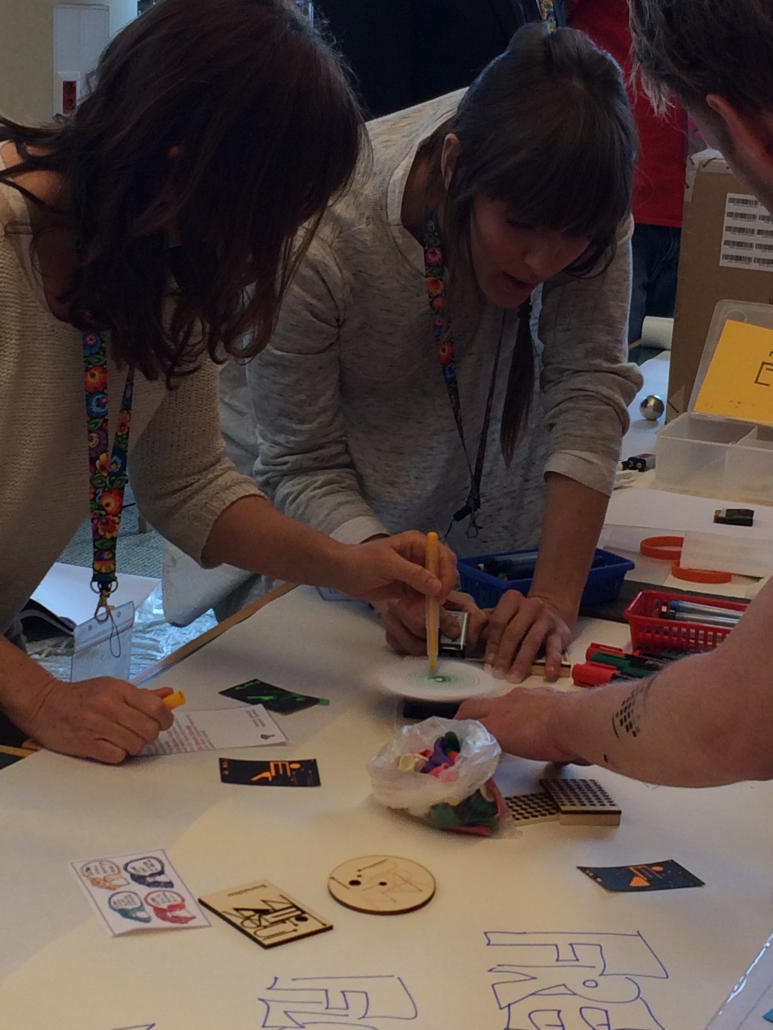
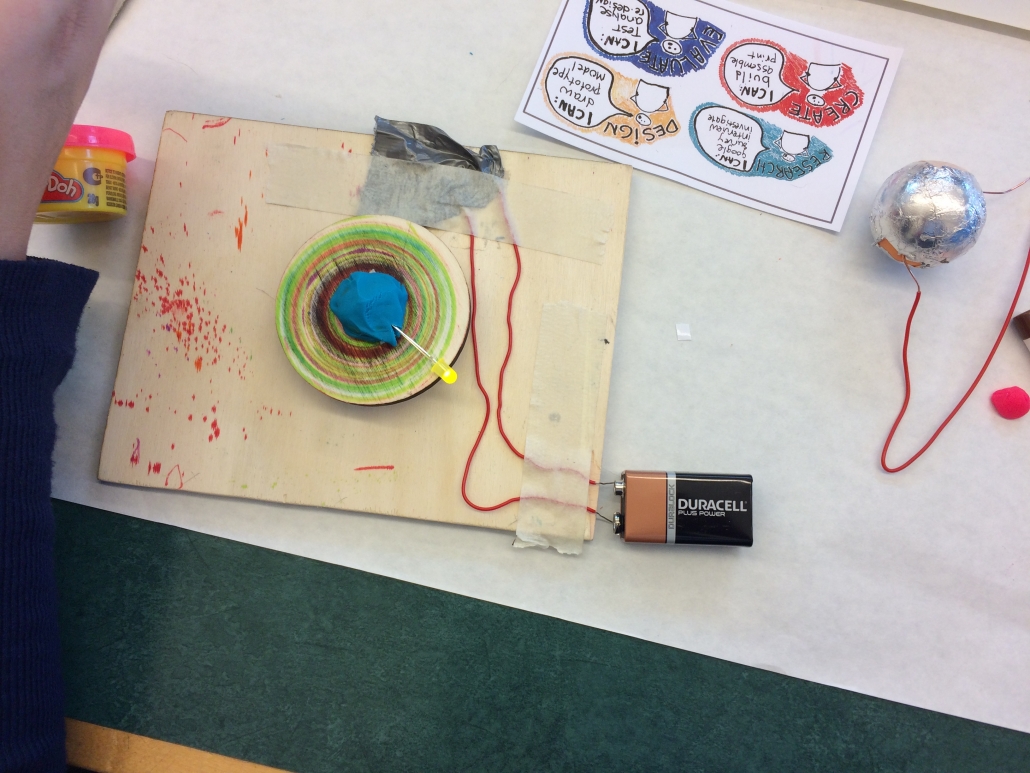
I attended several inspiring sessions. In the ‘Maker your own Learning’ session, we tinkered and built our designs, tackled frustrations and created an artifact. We  hacked our conference badge with paper circuitry and led stickers, hooking up Makey Makey, synthesiser, Arduino lighting and Raspberry Pi to make things blink and more In ‘Making Thinking Visible Using Technology’ we explored different technologies that help capture evidence of student learning. The emphasis was on students using the tools to create to demonstrate learning. L2 was was a rich learning experience!

I went to Barcelona for a MYP Category 2 Physical Health and Education (PHE) workshop.  I had the opportunity to connect with many other Physical and Health teachers about the ins and outs of PHE assessment, discussing our varying PE philosophies and program focuses.

One challenge we face as PHE teachers in the MYP is the balance between skill/performance based assessments and written assessments such as reflections.  A main topic of discussion during the workshop was different ways we can strike this balance and still uphold the standards of our PE program and the MYP.

Overall, I have returned with a stronger knowledge and increased confidence of how to accurately write task-specific clarifications and effectively construct a statement of inquiry so it flows along with the key, global, and related concepts of the MYP.

Lauren Grahame and Tina Bui had the privilege of attending the Adolescent Literacy Summit which was hosted by and held at the International School of Bangkok. The focus of the summit was to look at ways that we can help students build and sustain reading and writing identities for life, as research shows us that too often, by adolescence, students lose their passion for reading and writing.  Five experts in the field of literacy— Penny Kittle, Kelly Gallagher, Kylene Beers, Bob Probst and Tom Newkirk— along with the 2016 Newbery Award winner, Matt de la Peña, informed and inspired more than 150 teachers and administrators from a range of international schools.

We came away with lots of ideas to think about as we look to further develop our classroom practices as well as practical strategies to put into place right away. In the spirit of Twitter, here are some of our important takeaways:

To develop readers:

“The first and foremost goal is to raise reading volume.” -Penny Kittle

“What does it matter if you’ve taught every standard, but they leave school as non-readers?” – Penny Kittle

“Engagement + Volume leads to text Complexity” – Kelly Gallagher

“Let’s create lifetime readers, not just school time readers.” – Kylene Beers

“Our passion has to be contagious— passion for books, for students and the belief that there is a book for every dormant reader.” – Kelly Gallagher

“You can’t improve competence without improving confidence.” – Kylene Beers

To develop writers:

“We need to shift the emphasis from task oriented writing to more generative writing. Writing to discover thinking, writing to access and extend knowledge.”

“Do a lot of assessing but as little grading as possible. ‘Everyone improves’ is different from sorting winners and losers.” – Kelly Gallagher.

“Quality of writing is supported by the quantity and the opportunity for experimentation. “ – Nancie Atwell

“Narrative is central to all writing.” – Tom Newkirk

On digital literacy:

“Surfing the web is not the same as daydreaming. It does not provide the same space for self-reflection.” – Kylene Beers

“Just because they’re digital natives, doesn’t mean they know what to do.” – Kylene Beers

“Kids fail at games more than they succeed, but they keep going. They’re resilient and committed. How can we harness that?”

“We want bi-literate brains/readers. Kids need “click and go” reading AND real books.” –

Recommended reading/viewing:

The Winter of Our Disconnect

Readicide

Reclaiming Conversation

Proust and the Squid

The Danger of a Single Story – TedTalk

I went to Librarians-Job-A-Like and  talked about Library as the place for the community and library as a place. We discussed the strategies what will be the best thing for the library to do. And I believe we do everything here at IICS that can be done. Library as the community involves: Family reading nights, Coffee Mornings book chats, Do research sessions with Hight Schools. We would like to do the morning book chats and/or family reading nights. The issue here is the distance (our location unfortunately is not the best for many families).   We also discussed the Maker Space, it is a lego wall or a corner in the library where kids create and make things. It will be a great idea in the future if we have a bigger space! These are the links of article we discussed! Mission Creep is Killing LibrariesTurning the School Library into a Community HubLibrarians Changing Roles Inspire Schools   Another great session that I visited was “The Power of Empathy” by Judy Saruhan. How to have non-violent communications and have persistent arguments. It is a great session and I wish we had more time on this topic. I know Judy presented her session at Hisar. Maybe  it will be also useful to do that here at Marmara for many Teachers and TA as one of the PD in the future. During the session I witnessed that there are some teachers at other schools do not know how to communicate with peers and students and thus this PD will be useful.   Finally, another good thing we can offer to our school teachers as PD is research skills. I noticed that most students and teachers are using non-academic sources for their research. So library and maybe IT together can offer some PD in that.